Health & Fitness
They Said What!!
So, what happened to cause the change from A+ Stable of August 2009 to AA-/Stable in November of 2011? And who cares anyway?
I have already confessed, many times, that I was not the brightest student in Algebra or in any other class requiring the calculation of numbers whose end result might make some sense.
So, I would really like someone to enlighten me as to how the mayor could announce in September on a "... Thursday that he is laying off his office administrator as part of an effort to trim a possible $1.26 million from the 2012-13 budget." then announce on a Friday in November "...that money was found in the Finance Department’s budget to fund her $52,000-a-year position through the fiscal year..." and THEN assure Fitch Ratings that "... "...further expenditure cuts, including additional staff reductions, can be made if necessary to help maintain balanced operations."
I understand that the amount needed to pay the mayor's administrator is only a drop in the proverbial bucket but that continuing trickling has certainly gone a long way in draining New London's financial bucket.
As if things were not bad enough and seemingly getting worse with every mayoral press release, we now read in Paul Choiniere blog that “New London's financial struggles have gotten the attention of a credit rating agency responsible for evaluating its ability to pay off loans on time. Fitch Ratings recently informed the administration that the city's AA- rating for general obligation bonds, which dropped a notch last March, is in peril of sinking further. Fitch now lists New London's rating outlook as negative.”
While I can’t argue with that (well actually I can but it would just be arguing for argument’s sake) there are a number of things that Choiniere neglects to mention such as while Fitch's is one of the three top credit rating agencies it is the smallest of the three with Standard & Poor and Moody’s holding the top spots and both of them have different things to say about our city.
Find out what's happening in New Londonwith free, real-time updates from Patch.
For example, Standard & Poor , the largest of the three, on August 21, 2009 gave the city of New London an A+ Stable rating with a STABLE outlook until November 30, 2011 at which time New London’s rating changed to AA-/Stable on November 30, 2011.
So, what happened to cause the change from A+ Stable of August 2009 to AA-/Stable in November of 2011?
Find out what's happening in New Londonwith free, real-time updates from Patch.
Sadly, I’m not smart enough, at least in that area, to figure it out. The only event that I know of any significance that took place in November of 2011 in New London was a switch to a mayoral form of government and the election of Daryl Justin Finizio as this city’s first elected mayor in 90 years.
Make of that what you will.
My personal thought is that all of the jockeying for position and the accompanying press conferences, press releases, executive orders, etc, etc and etc led to a media blitz that, while it may not have been the cause of our present predicament, certainly didn’t help us any either.
EVERYTHING IS RELATIVE
So what does it mean to be saddled with a “…AA- rating for general obligation bonds…” from Fitch?
I’m not sure of that either since, as I’ve already said earlier, Standard & Poor seems to think we’re in pretty good shape and hasn’t burdened us with the dreaded Negative rating.
Imagine how the poor residents of Zion, IL, Youngstown, OH, Independence, KS and Port Townsend, WA are feeling after receiving, in the last 24 hours, a big fat NEGATIVE after their ratings which, in some cases, were as low as BBB!
Or the embarrassment suffered by members of the Zanesville City School District in Ohio, the South Carolina Public Service Authority or the Charlotte, SC Housing Authority all of which received ratings far worse than ours.
Frankly, I was so worried about some of these places after reading their bond ratings, etc that I actually went to some of their websites to see if they were still in existence. Amazingly, not only are places like Youngstown, OH, Independence, KS and Port Townsend, WA still there but it hurts me to say that their websites look a hell of a lot better than ours.
And, really, how bad off can we be if the city is still hiring and the mayor was able to find $34K that appeared out of nowhere to hire back, in November, his administrative aide who he had just laid off in September?
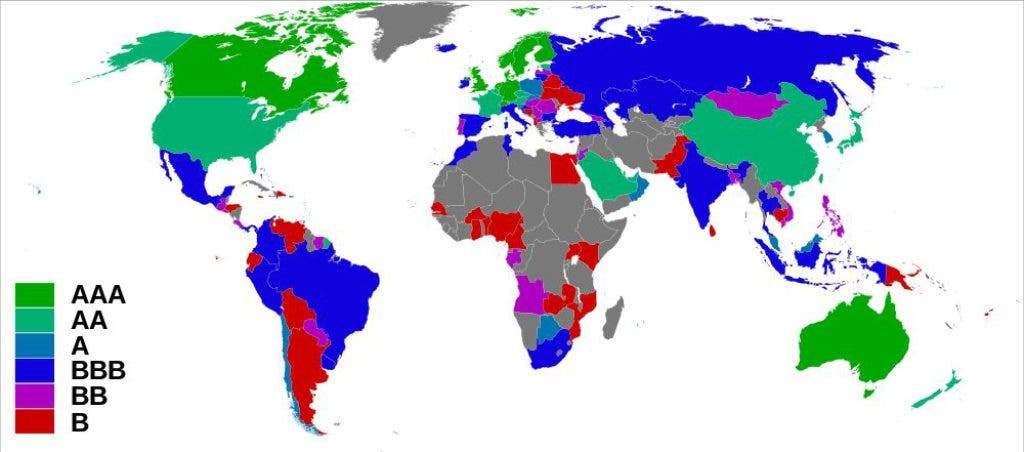
While I understand that we, like the rest of the world, are stuck with credit rating companies it may make you feel marginally better and put things in perspective to know that Fitch gave the entire United States a triple A rating with a NEGATIVE outlook while giving places I’m not even sure it’s safe to go to like Azerbaijan, Uruguay, Namibia and Kazakhstan all BB ratings or lower and a POSITIVE outlook.
Go figure!
Here’s a few more things that you might find interesting; detractors of credit rating agencies, and there are many, have pointed out that, at the very least, the agencies played a significant part in the financial crisis of 2008 and 2009 and at the worst may have, in fact, caused it.
Joe Klein, Time Magazine’s Political Columnist, wrote “I remain amazed that anyone continues to take S&P, or Moody’s, seriously after both agencies granted AAA rating to Collateralized Debt Obligations (CDOs) that were chock-full-of crap mortgages, thereby helping to precipitate the 2008 financial collapse.
In a 2011 New York Times article reporting on an upcoming House Financial Services oversight committee’s hearing “…called to discuss the impact of new financial regulations on the major rating agencies… the ratings agencies’ own track record came under attack.” And not without reason.
From reports of bond issuers paying for the privilege of a top rating to flawed assessments on ratings of state and municipal debt over the years on to complaints of intimidation from greedy bankers and supervisors by former credit rating agency employees, the history of credit rating agencies is suspect and their future impact is in question.
So who, me, worry?
The city of New London has survived Benedict Arnold, the 1938 Hurricane, Captain’s Walk, Fort Trumbull, etc and I have faith that it will survive the credit rating agencies.